
Cathay Financial Holdings Puts Investment Risk at Center of Climate Finance Push
At Climate Week NYC, Cathay FHC highlighted how risk management, public-private partnerships and better data can turn
Press Release Disclaimer: This is a press release distributed through the XPR Media network. It has not been independently verified by our newsroom.
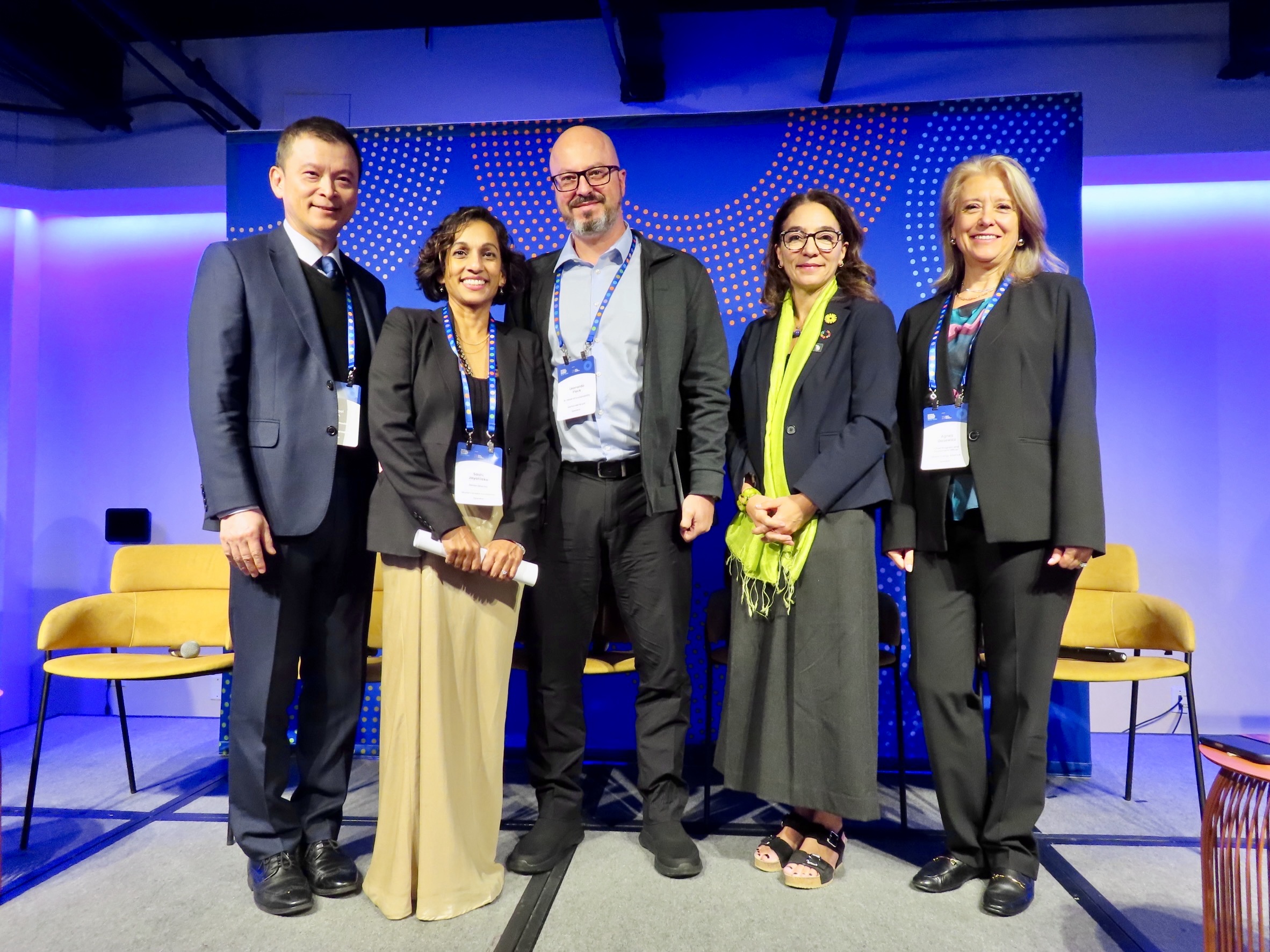

At Climate Week NYC, Cathay FHC highlighted how risk management, public-private partnerships and better data can turn climate pledges into investable projects.
TAIPEI, TAIWAN, October 23, 2026 /EINPresswire.com/ — Climate finance faces a persistent problem: funding commitments are growing, but too few projects can attract the capital needed to get off the ground. Regulatory uncertainty, investment risks and limited commercial track records continue to hold back private investors, particularly in emerging markets.
Cathay Financial Holdings (Cathay FHC) is seeking to bridge that gap by applying its risk management and investment expertise to make climate projects more bankable, while supporting partnerships and data infrastructure that could help unlock private capital.
The Taiwanese financial group outlined its approach at Climate Week NYC, marking its fifth consecutive year at the event. Cathay United Bank Executive Vice President Michael Wen represented the group at the World Climate Summit (WCS), where he was the only Taiwanese representative, joining discussions on mobilizing climate investment ahead of the COP31 UN climate conference.
Making Climate Projects Bankable
“A sustainability label is not a passport to financing,” Wen said during a panel titled “Mobilizing Capital for Growth: From Commitments to Transactions.” “Even when a project delivers environmental benefits, capital does not automatically follow. Financial institutions must assess the risks they are taking, whether returns are reasonable and whether the investment can remain viable over the long term.”
Cathay FHC’s experience in Taiwan’s offshore wind sector offers an example. Facing the technical complexity and financial risks of large-scale renewable energy infrastructure, the group brought in external technical advisers and engaged regulators early to assess potential obstacles and mitigation measures. The groundwork supported its continued strategic partnership with Danish renewable energy developer Ørsted in Taiwan’s offshore wind industry.
Sharing Risk to Unlock Capital
Risk allocation remains another obstacle. Climate projects, particularly those in early-stage markets, often struggle to secure commercial financing despite their environmental benefits. Wen pointed to blended finance — combining public, development finance, philanthropic and private capital — as a potential way to distribute risks and make projects more attractive to commercial investors.
Early regulatory engagement and partnerships with local market specialists can also help address uncertainties that might otherwise prevent investment. The challenge extends beyond funding. Investors need a pipeline of projects with credible financial structures, measurable impact and potential to scale.
Cathay FHC has supported the Asian Venture Philanthropy Network (AVPN) in establishing Asia’s Clean Energy Transition Initiative (ASCENT), which uses a just energy transition framework, impact measurement principles and a database of practical solutions to help connect sustainable projects with potential financing.
Better Data, Better Pricing
Reliable sustainability data is another missing piece. Inconsistent definitions and calculation methods make it difficult for financial institutions to compare projects, assess exposure and price climate-related risks. Wen called for common reporting standards shaped by regulators, practical data requirements from financial institutions and greater use of trusted technology platforms and artificial intelligence to improve consistency.
Better data could allow lenders and investors to distinguish viable projects from those carrying risks that are difficult to measure or price, helping direct capital where it can be deployed effectively.
From Pledges to Transactions
Climate Week NYC 2026 drew more than 120,000 participants across over 1,500 events, according to organizer Climate Group, as governments, businesses and investors debated how to translate climate commitments into measurable results.
For Cathay FHC, the focus is on using financial tools to address the barriers between climate ambition and actual investment — from assessing project risks and structuring partnerships to improving project pipelines and sustainability data. The approach forms part of the group’s broader sustainability strategy spanning Climate, Health and Empowerment.
The underlying question for climate finance is no longer just how much capital is pledged, but how much can be put to work.
Astin Chang
Cathay Financial Holdings
Legal Disclaimer:
EIN Presswire provides this news content “as is” without warranty of any kind. We do not accept any responsibility or liability
for the accuracy, content, images, videos, licenses, completeness, legality, or reliability of the information contained in this
article. If you have any complaints or copyright issues related to this article, kindly contact the author above.

Media gallery

