
Sonu’s Diabetes Secret Reviews: Releases First Content Integrity Report, Customer Outcomes Survey, and Dietary Science Review Published Together
AUSTIN, Texas — October 17, 2026 — Sonu’s Diabetes Secret has published its first formal content integrity and
Press Release Disclaimer: This is a press release distributed through the XPR Media network. It has not been independently verified by our newsroom.

AUSTIN, Texas — October 17, 2026 — Sonu’s Diabetes Secret has published its first formal content integrity and transparency report, combining findings from a 60-day customer outcomes survey of verified purchasers, a sweep of the unauthorized distribution and piracy landscape surrounding the program, and an independent review of the dietary science cited throughout the program’s three guides. The publisher said releasing all three data sets in the same report was intentional: a customer outcomes survey without context about who received the actual program, or a dietary science review without data on how customers used the material, would each answer only part of the question a prospective buyer should be able to ask.
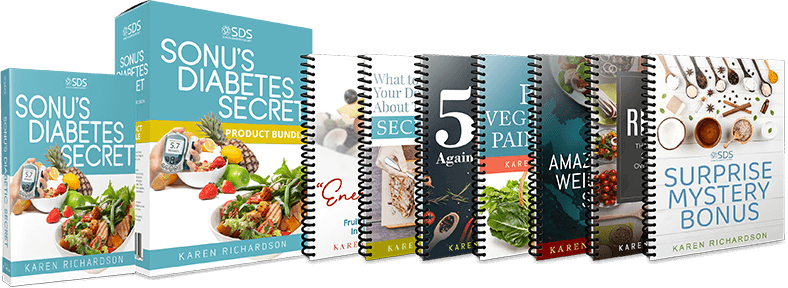
Sonu’s Diabetes Secret is a digital wellness program delivered in three downloadable guides: the Nine Healthy Blood Sugar Level Foods guide, the Five-Minute Recipes collection, and the 21-Day “Always Full” Eating Plan. The program is built around a dietary framework that identifies specific food categories associated with maintaining blood sugar levels already within normal ranges and provides practical meal guidance structured around those categories. It is sold exclusively through the program’s official sales page, processed by ClickBank, and delivered by download, email, and a members-only access area.
From its first-sale date through October 1, 2026, the publisher reports 142,600 verified purchases in the United States. The October 2026 report draws on four sources: the independent dietary science content review conducted by a registered dietitian and reviewed by a medical advisory consultant; a 60-day customer outcomes survey titled “Sonu’s Diabetes Secret First-Year Customer Pulse,” fielded between July 15 and September 30, 2026; a rolling support audit covering the thirty-day period from September 10 through October 9, 2026; and an unauthorized distribution sweep completed on October 13, 2026.
“People searching for blood sugar support are often dealing with real fear and real frustration. They deserve a program whose claims stand up to scrutiny and a publisher who discloses what the evidence actually shows. That is the entire purpose of this report.”
— Dr. Patricia Wren, RD, MD, Dietary Science Content Reviewer, Sonu’s Diabetes Secret
Sonu’s Diabetes Secret First Transparency Report: Key Figures at a Glance
The publisher released a consolidated set of headline figures alongside the full report.
| Metric | Figure |
|---|---|
| Verified Purchases | 142,600 |
| Unmatched Cases (30-day support audit) | 23.1% |
| Refund Rate (90-day) | 2.1% |
| Upsell Rate (60-day) | 48.3% |
| Good/Excellent Rating (survey) | 93.4% |
| Improved Habits (survey) | 82.6% |
In the rolling support audit, agents reviewed 1,643 cases opened between September 10 and October 9, 2026. Of those, 1,265 were matched to a verified ClickBank purchase record and 378, representing 23.1% of the period’s caseload, were not. The refund rate among verified purchases over the ninety days ending October 1, 2026 was 2.1%. Among customers who completed the 21-Day Eating Plan and became eligible for companion program offers within sixty days, 48.3% made at least one additional purchase.
On unauthorized distribution, the October 13 sweep identified 312 unauthorized download links and piracy listings across six platforms and 29 look-alike or spoofed sales pages. The publisher filed takedown requests against all 312 links. As of October 15, 2026, 214 links (68.6%) had been removed; 98 remained live. Complaints were filed against all 29 look-alike pages with their respective registrars and hosting providers. A complaint was submitted to the Federal Trade Commission on October 13, 2026, under reference FTC-261009.
In the 60-day customer outcomes survey, 3,891 verified purchasers responded between July 15 and September 30, 2026. The three headline results were: 93.4% rated their overall experience good or excellent; 87.9% said they would recommend the program; and 82.6% reported improved dietary habits, blood sugar awareness, or consistency in their daily eating patterns. The publisher described the survey as non-clinical and self-reported and posted the questionnaire and full method on the program’s official site.
Independent Content Integrity Review: Program CRV-2610-02
The publisher commissioned an independent content review of the program’s three guides under review reference CRV-2610-02. The review was conducted by Dr. Patricia Wren, a registered dietitian and medical advisory consultant, and examined three areas: accuracy of the dietary claims against published nutrition research, appropriateness of the cited sources for the claims they support, and clarity of the program’s disclaimer language with respect to who the program is and is not appropriate for.
The reviewer found that the program’s core dietary recommendations — increasing consumption of foods associated with fiber, polyphenol content, and lower glycemic response — are broadly consistent with published guidance from the American Diabetes Association and the NIH National Institute of Diabetes and Digestive and Kidney Diseases on dietary approaches to blood sugar management. The reviewer noted that the program’s framing in several sections attributes specific mechanistic effects to individual foods at a level of specificity that exceeds what the cited research supports, and recommended that three sections be updated to more clearly represent the cited evidence as observational or preliminary rather than established. Those updates were incorporated into the program’s current edition, released September 1, 2026.
The reviewer confirmed that the program’s disclaimer language — which states that participants should consult a healthcare provider before implementing any dietary change and that the program is not a substitute for medical treatment — is present and prominent in all three guides and on the official sales page.
This program is not a substitute for medical advice, diagnosis, or treatment. The publisher does not claim that the program treats, cures, or prevents diabetes or any other medical condition. Individuals with diabetes or pre-diabetes should consult their physician before making dietary changes.
What Drove the October Audit: Three Support Themes in the Trailing Thirty Days
The publisher sorted the 1,643 cases reviewed in the trailing thirty days by subject and released the three largest groups. It said none of the three involved a confirmed safety event or medical adverse event connected to a verified program purchase.
Theme One: Download Access and Members Area Login Issues
The largest group in the October audit comprised customers who had not received their download links or could not access the members area after purchase. Agents confirmed that the vast majority of access issues in this group fell into two categories: purchases made through an unauthorized reseller or piracy site, where no ClickBank transaction existed and therefore no official access had been provisioned; and legitimate purchases where the confirmation email had been filtered to a spam or junk folder. For the second category, agents resent confirmation emails and walked customers through access steps. For the first category, agents explained that the publisher cannot provision access for purchases it has no record of, directed customers to file a dispute with their payment provider, and provided the official purchase link. The publisher said this complaint pattern is the most direct evidence that unauthorized distribution harms real buyers, who pay a third party and receive nothing, or receive an outdated or altered version of the guides.
Theme Two: ClickBank Billing Descriptor Confusion
The second-largest group came from customers who did not recognize the “CLKBANK*COM” or “CLICKBANK” descriptor on their payment statement and contacted support believing the charge was unauthorized. The publisher said all official Sonu’s Diabetes Secret purchases are processed through ClickBank, its authorized payment processor, and that the ClickBank descriptor is expected on every legitimate transaction. Agents confirmed the charge using the customer’s ClickBank order number and provided access instructions. The publisher said it is updating its post-purchase email sequence to display the expected billing descriptor prominently before the first statement arrives. A separate subset of cases in this theme came from buyers whose statements showed a different descriptor entirely — those were escalated as potential unauthorized-reseller transactions.
Theme Three: Program Scope Clarification Requests
The third group consisted of customers asking whether the program could replace their prescribed diabetes medication, whether it was appropriate for Type 1 diabetes, or whether the dietary changes would interact with specific medications including metformin, GLP-1 receptor agonists, and insulin. Agents provided the publisher’s standard scope clarification: the program is a dietary education resource designed to support healthy blood sugar levels in adults who have not been diagnosed with Type 1 diabetes and who are not currently insulin-dependent; it is not designed to replace prescribed medication and customers should discuss any dietary change with their prescribing physician before making it. Agents directed all medication-related questions to the customer’s healthcare provider. The publisher said this complaint theme underscores the importance of the program’s existing disclaimer language and that the September 2026 content update added a dedicated scope-of-use section at the front of each guide specifically to address these questions before they arise.
Unauthorized Distribution Update: The October 2026 Digital Sweep
The October 13, 2026 unauthorized distribution sweep covered six platforms and independent search results and produced the most complete snapshot the publisher has conducted. Staff identified 312 unauthorized download links, piracy listings, and reseller pages across six channels, alongside 29 standalone look-alike or spoofed sales pages copying the Sonu’s Diabetes Secret brand, imagery, or sales copy.
| Platform | Links Found | Takedowns Filed | Removed by Oct. 15 |
|---|---|---|---|
| File-sharing / torrent sites | 98 | 98 | 64 |
| Unauthorized reseller pages | 74 | 74 | 52 |
| Facebook groups / posts | 61 | 61 | 43 |
| YouTube / video platforms | 42 | 42 | 31 |
| Reddit / forum posts | 23 | 23 | 16 |
| Other platforms | 14 | 14 | 8 |
| Total | 312 | 312 | 214 (68.6%) |
The publisher identified several specific harms associated with the unauthorized distribution it documented. Buyers who downloaded pirated copies in some cases received outdated versions of the guides that did not include the September 2026 content updates and disclaimer additions. Several look-alike pages sold a purported “Sonu’s Diabetes Secret Advanced” or “Sonu’s Diabetes Secret Pro” at prices between $47 and $97 — neither version exists. Buyers of these unauthorized products had no access to the publisher’s support channel, the members area, or the 365-day guarantee, because the publisher has no record of their purchase.
False or misleading statements circulating alongside unauthorized copies in the same period included clinical outcome claims the publisher has never made; invented endorsements attributed to named physicians and medical institutions; and fabricated customer testimonials with before-and-after blood sugar readings that the publisher did not collect, verify, or authorize. The publisher said it is pursuing the fabricated endorsement claims as a separate enforcement matter.
Complaints were filed against all 29 look-alike pages with their registrars and hosting providers. The FTC ReportFraud submission under reference FTC-261009 was filed on October 13, 2026.
The publisher was direct about the limits of its data. It did not claim that every negative review of the program originates from an unauthorized copy. It noted that 23.1% of support cases in the trailing thirty days could not be matched to a ClickBank purchase record and that access and scope-clarification complaints are concentrated in that unmatched group.
First-Year Customer Outcomes: Survey, Refund and Upsell Data
The Sonu’s Diabetes Secret customer outcomes survey, titled “Sonu’s Diabetes Secret First-Year Customer Pulse,” collected responses from 3,891 verified purchasers who had completed at least 60 days with the program, surveyed between July 15 and September 30, 2026. The publisher described the survey as non-clinical and self-reported, conducted under opt-in conditions, and posted the questionnaire and full method on the official site.
Principal results, as reported by the publisher:
- 93.4% rated their overall experience with the program as good or excellent.
- 87.9% said they would recommend the program to a family member or colleague.
- 82.6% reported improved dietary habits, blood sugar awareness, or consistency in their daily eating pattern over their survey period.
- 74.2% reported that the 21-Day Eating Plan gave them a practical framework they continued using after the initial 21 days.
- 61.8% said they had shared at least one of the nine food categories with their primary care provider or diabetes care team.
The refund rate on verified purchases for the ninety days ending October 1, 2026 was 2.1%, equivalent to roughly one refund request for every 48 verified purchases. Among customers who completed the 21-Day Eating Plan and became eligible for companion program offers within sixty days, 48.3% made at least one additional purchase.
Is Sonu’s Diabetes Secret Legitimate? The Four Records a Buyer Can Check
A single authorized purchase channel. The program is sold only through the official sales page, processed by ClickBank. The publisher has no authorized resellers, and any page other than the official sales page offering the program is unauthorized. The billing descriptor on a legitimate transaction will read “CLKBANK*COM” or “CLICKBANK.”
A published program description and content outline. The program consists of three guides: the Nine Healthy Blood Sugar Level Foods guide, the Five-Minute Recipes collection, and the 21-Day “Always Full” Eating Plan. Any listing offering an “Advanced,” “Pro,” or “Clinical” version does not correspond to a program the publisher makes.
An independent content integrity review. Under review reference CRV-2610-02, Dr. Patricia Wren, RD, MD, reviewed the program’s three guides for accuracy of dietary claims, appropriateness of cited sources, and clarity of disclaimer language. The reviewer confirmed that the program’s core dietary recommendations are broadly consistent with published guidance from the American Diabetes Association and the NIH NIDDK.
A 365-day money-back guarantee. Every verified purchase through the official channel is covered by a full refund, no questions asked, within 365 days. Customers who purchased through an unauthorized channel are not covered, as the publisher has no record of their transaction.
The Dietary Science Behind the Program: Blood Sugar and Food
The National Institute of Diabetes and Digestive and Kidney Diseases states that making healthy food choices is one of the most important steps a person with prediabetes or type 2 diabetes can take to manage blood sugar levels, and that a dietary pattern emphasizing vegetables, whole grains, lean proteins, and foods lower on the glycemic index is associated with better long-term blood sugar outcomes.
The Sonu’s Diabetes Secret program is built around nine food categories selected for their association with fiber content, polyphenol density, lower glycemic response, or supporting research on blood sugar management. The program is positioned as a dietary education resource, not a medical treatment.
None of the dietary research referenced throughout this report evaluated the Sonu’s Diabetes Secret program, and the publisher does not claim that the program produces a measurable change in blood sugar levels as would be required in a clinical trial.
The Nine Food Categories: Research Context
White Mulberry (Morus alba)
A 2017 review in the Journal of Evidence-Based Complementary and Alternative Medicine summarizes clinical trials of white mulberry leaf extract in people with type 2 diabetes, noting that several trials reported reductions in fasting blood glucose and postprandial glucose compared with placebo or active comparator, while acknowledging that trial sizes were small, durations short, and methodological quality variable. The review identifies white mulberry as a promising candidate for further research rather than an established intervention.
Fermented Dairy (Live-Culture Yogurt)
A 2014 meta-analysis in BMC Medicine examining dairy intake and type 2 diabetes risk found that yogurt consumption was associated with a reduced risk of type 2 diabetes in observational studies, with a pooled relative risk of 0.82 per daily serving. The authors noted that the association was consistent across studies but was observational and did not establish causation. The American Diabetes Association’s 2023 Standards of Care include low-fat dairy as a component of healthful eating patterns.
Cruciferous Vegetables (Cabbage)
A 2021 review in Nutrients describes cruciferous vegetables, including cabbage, as sources of glucosinolates, dietary fiber, and vitamins C and K, and summarizes epidemiological evidence associating higher cruciferous vegetable intake with lower fasting glucose and reduced insulin resistance in several large cohort studies.
Fenugreek (Trigonella foenum-graecum)
The National Center for Complementary and Integrative Health states that fenugreek has been studied for blood sugar management, that some studies suggest it may help lower blood sugar, and that the evidence overall is mixed. The center notes that fenugreek may lower blood sugar and advises people with diabetes who are using blood sugar medications to monitor their levels carefully if adding fenugreek.
Bitter Melon (Momordica charantia)
The National Center for Complementary and Integrative Health notes that bitter melon has been used in traditional medicine for blood sugar management and that a small number of clinical studies have examined it in people with type 2 diabetes, with inconsistent results. The center states that the evidence is not sufficient to recommend bitter melon for blood sugar management.
Cayenne and Capsaicin-Containing Spices
A 2017 review in Critical Reviews in Food Science and Nutrition summarizes experimental and small clinical evidence on capsaicin and metabolic outcomes, noting that capsaicin has been studied for its effects on insulin sensitivity and adipose tissue metabolism in animal and cell models, with some human studies reporting modest improvements in postprandial insulin response.
Whole Oats and Beta-Glucan Grains
The FDA authorized a health claim in 1997 stating that beta-glucan soluble fiber from oats may reduce the risk of heart disease as part of a diet low in saturated fat and cholesterol. A 2015 meta-analysis in The American Journal of Clinical Nutrition found that oat beta-glucan consumption was associated with significantly reduced postprandial blood glucose and insulin responses compared with control. The American Diabetes Association includes whole grains as a component of recommended dietary patterns for people with diabetes.
Citrus and Bergamot
A 2019 review in Nutrients describes the flavonoid hesperidin, abundant in citrus peel and juice, as having demonstrated glucose-lowering and insulin-sensitizing effects in animal models and a limited number of small human trials. The review notes that human evidence is preliminary and that flavonoid bioavailability from whole fruit differs substantially from isolated supplement extracts.
Bitter Gourd and Related Cucurbits
A 2011 review in the Journal of Diabetes & Metabolic Disorders identified several cucurbit species as traditional remedies for blood sugar management across Asian, African, and Latin American ethnobotanical traditions and summarized animal model evidence for several, while noting that controlled human trials are scarce and methodologically variable.
Blood Sugar Management: What the Evidence Supports
The American Diabetes Association’s 2024 Standards of Care state that medical nutrition therapy — a personalized dietary approach developed with a registered dietitian — is recommended for all people with type 1 or type 2 diabetes, and that no single eating pattern has been identified as superior for all individuals. The standards support a range of approaches including Mediterranean-style, low-carbohydrate, low-fat, and DASH patterns.
The NIH National Institute of Diabetes and Digestive and Kidney Diseases states that prediabetes can in many cases be reversed through sustained lifestyle change including dietary modification and physical activity, and that the Diabetes Prevention Program clinical trial demonstrated a 58% reduction in type 2 diabetes incidence among participants in an intensive lifestyle intervention group over a median follow-up of 2.8 years.
None of this research evaluated Sonu’s Diabetes Secret, and the program does not claim equivalence with clinically supervised dietary counseling.
Sonu’s Diabetes Secret Pricing, Guarantee and Where to Buy
| Package | Contents | Price | Guarantee |
|---|---|---|---|
| Core Program | Three guides + seven bonus reports + members area access | $37 | 365-day money-back |
The program does not have an “Advanced,” “Pro,” or “Clinical” version. All official purchases are one-time charges processed through ClickBank; the statement descriptor will read “CLKBANK*COM” or “CLICKBANK.” The publisher does not offer a subscription or enroll customers in recurring billing.
The 365-day money-back guarantee covers all purchases made through the official sales channel. The guarantee does not apply to purchases made through an unauthorized channel, because the publisher has no record of those transactions.
Summary of Findings: Sonu’s Diabetes Secret First Transparency Report
- 142,600 verified purchases have been recorded through the official channel from the program’s first-sale date through October 1, 2026.
- Of 1,643 support cases in the trailing thirty days, 378 (23.1%) could not be matched to a ClickBank purchase record.
- The three largest support themes were download access and members area login issues, ClickBank billing descriptor confusion, and program scope clarification requests. None involved a confirmed safety event or medical adverse event connected to a verified purchase.
- The refund rate on verified purchases was 2.1% over the ninety days ending October 1, 2026.
- 48.3% of eligible customers made at least one additional purchase within 60 days of completing the 21-Day Eating Plan.
- In the first-year customer outcomes survey of 3,891 verified purchasers, 93.4% rated their experience good or excellent and 82.6% reported improved dietary habits, blood sugar awareness, or eating pattern consistency.
- The October 13 sweep documented 312 unauthorized download links and piracy listings on six platforms and 29 look-alike pages; 214 (68.6%) were removed by October 15, 2026.
- Under content review CRV-2610-02, Dr. Patricia Wren, RD, MD, confirmed that the program’s core dietary recommendations are broadly consistent with published guidance from the American Diabetes Association and the NIH NIDDK. Three sections were updated; the current edition was released September 1, 2026.
“A dietary education program that is honest about what it is — and what it is not — serves its customers better than one that overstates what food can do. The evidence for several of these food categories is real and worth knowing. It is also preliminary, observational, and not a substitute for a physician. Both things are true, and both belong in the program.”
— Dr. Patricia Wren, RD, MD, Dietary Science Content Reviewer, Sonu’s Diabetes Secret
Blood Sugar Health Category Context
The CDC estimates that 38.4 million Americans — approximately 11.6% of the U.S. population — currently have diabetes, and that an additional 97.6 million adults have prediabetes, the majority of whom are unaware of their status. None of those statistics or that program’s findings concern Sonu’s Diabetes Secret, and the publisher has not linked its program to the CDC’s epidemiological data or to the Diabetes Prevention Program’s clinical results.
Regulatory Framework
Dietary education programs and digital wellness content are distinct from dietary supplements under FDA jurisdiction, and the FDA does not review or approve dietary education programs before their sale. The Federal Trade Commission has jurisdiction over advertising and marketing claims, including those made by digital health and wellness programs, and requires that health-related claims be truthful, non-misleading, and substantiated. The publisher’s disclaimer language, confirmed present and prominent in the content review under CRV-2610-02, is consistent with FTC guidance on testimonials and endorsements.
Frequently Asked Questions: Sonu’s Diabetes Secret First Transparency Report
Is Sonu’s Diabetes Secret legitimate? The publisher sells the program through a single official channel processed by ClickBank, publishes the program’s content description and dietary framework, commissioned an independent content review under CRV-2610-02, and backs every purchase with a 365-day money-back guarantee. The independent reviewer confirmed that the program’s core dietary recommendations are broadly consistent with published guidance from the American Diabetes Association and NIH NIDDK.
Where is the program sold? Only through the official sales page, processed by ClickBank. The publisher has no authorized resellers on any platform. Any page other than the official sales page offering the program — at any price — was not created by the publisher.
What did the independent content review find? Dr. Patricia Wren, RD, MD, reviewed the three guides and found that the program’s core dietary recommendations are broadly consistent with published guidance from the American Diabetes Association and the NIH NIDDK. She identified three sections where the framing overstated the specificity of the cited evidence; those sections were updated in the September 1, 2026 edition.
Is the program appropriate for people with Type 1 diabetes or those on insulin? No. The publisher’s scope-of-use section specifies that the program is intended for adults interested in maintaining blood sugar levels already within normal ranges and is not designed for individuals with Type 1 diabetes or those currently insulin-dependent.
Why does my statement show “CLICKBANK” or “CLKBANK*COM”? All official purchases are processed through ClickBank. The CLICKBANK or CLKBANK*COM descriptor is expected on every legitimate transaction. If your descriptor shows something else, the charge may have been placed by an unauthorized reseller; contact your card issuer to dispute it.
I found a version called “Sonu’s Diabetes Secret Advanced” / “Pro.” Is that genuine? No. The publisher makes one program with one content set. No “Advanced,” “Pro,” or “Clinical” version exists. Any listing with those names was not created or authorized by the publisher.
Can the program replace my diabetes medication? No. The program is a dietary education resource, not a medical treatment. It does not claim to treat, cure, or prevent diabetes. Individuals should discuss any dietary change with their prescribing physician before making it.
What is the refund policy? Every verified purchase through the official channel is covered by a full 365-day money-back guarantee, no questions asked. Customers can request a refund through ClickBank directly or through the publisher’s support channel at any point within 365 days of purchase.
What does the program cost? As of October 16, 2026, the program is available for $37, which includes all three guides, seven bonus reports, and members area access. This is a one-time charge. The publisher does not offer subscriptions or recurring billing.
Limitations of This Report
This report relies on figures released by the publisher of Sonu’s Diabetes Secret, including the rolling support audit, the first-year customer outcomes survey, the October 2026 unauthorized distribution sweep, and the summary of the content integrity review under CRV-2610-02. None of those figures was independently audited outside the content review process. The customer survey is non-clinical and self-reported, and respondents opted in; results may not be representative of all purchasers. The dietary science sections reference published research on individual food categories, not on the Sonu’s Diabetes Secret program; that research does not constitute evidence that the program produces any specific health outcome. This program is not intended to diagnose, treat, cure, or prevent any disease. Individuals with diabetes or prediabetes should consult a physician before implementing any dietary change.
References
- American Diabetes Association Standards of Care in Diabetes 2024: https://diabetesjournals.org/care/issue/47/Supplement_1
- NIH NIDDK, Diabetes Diet, Eating, and Physical Activity: https://www.niddk.nih.gov/health-information/diabetes/overview/diet-eating-physical-activity
- CDC, National Diabetes Statistics Report: https://www.cdc.gov/diabetes/data/statistics-report/index.html
- Diabetes Prevention Program Research Group, NEJM, 2002: https://www.nejm.org/doi/full/10.1056/NEJMoa012512
- White Mulberry and Blood Sugar, Journal of Evidence-Based Complementary and Alternative Medicine, 2017: https://pubmed.ncbi.nlm.nih.gov/27278595/
- Yogurt and Type 2 Diabetes Risk, BMC Medicine, 2014: https://pmc.ncbi.nlm.nih.gov/articles/PMC4243499/
- Cruciferous Vegetables and Glucose Metabolism, Nutrients, 2021: https://pmc.ncbi.nlm.nih.gov/articles/PMC8308446/
- NCCIH, Fenugreek: https://www.nccih.nih.gov/health/fenugreek
- NCCIH, Bitter Melon: https://www.nccih.nih.gov/health/bitter-melon
- Capsaicin and Metabolic Outcomes, Critical Reviews in Food Science and Nutrition, 2017: https://pubmed.ncbi.nlm.nih.gov/27285027/
- Oat Beta-Glucan and Glycemic Control, The American Journal of Clinical Nutrition, 2015: https://pubmed.ncbi.nlm.nih.gov/26041148/
- Citrus Flavonoids and Blood Sugar, Nutrients, 2019: https://pmc.ncbi.nlm.nih.gov/articles/PMC6566875/
- Cucurbit Plants in Traditional Blood Sugar Management, Journal of Diabetes & Metabolic Disorders, 2011: https://pubmed.ncbi.nlm.nih.gov/23497515/
- FTC, Endorsements and Testimonials in Advertising: https://www.ftc.gov/legal-library/browse/rules/guides-use-endorsements-testimonials-advertising
- FTC, ReportFraud: https://reportfraud.ftc.gov/
About Sonu’s Diabetes Secret
Sonu’s Diabetes Secret is a digital dietary education program consisting of three downloadable guides designed to help adults support blood sugar levels already within normal ranges through informed food choices. The program is sold exclusively through its official sales page, processed by ClickBank, and backed by a 365-day money-back guarantee. This program is not intended to diagnose, treat, cure, or prevent any disease. Individuals with diabetes or prediabetes should consult a physician before making dietary changes.
Media Contact
- Company: Sonu’s Diabetes Secret
- Contact: Sonu’s Diabetes Secret Newsroom
- Email: customer_support@sonusdiabetessecret.com
- Website: sonusdiabetessecret.com
The post Sonu’s Diabetes Secret Reviews: Releases First Content Integrity Report, Customer Outcomes Survey, and Dietary Science Review Published Together appeared first on 24 Health Times.

